

By: Isaac Kwabena Boadu Date: 2nd June 2026
One hundred and four years ago, the Greenwood District of Tulsa, Oklahoma was reduced to ash not by accident, but by a deliberate assault on human dignity. Greenwood, known as “Black Wall Street,” was built by African Americans during segregation when the doors of white businesses were shut to them. With no safety net and no permission from the system, they built banks, hotels, clinics, schools, and more than three hundred businesses. It was proof that Black life, Black labor, and Black genius could create prosperity even under the weight of exclusion.
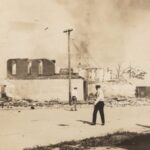
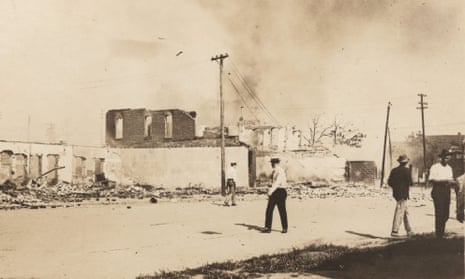
On the night of May 31, 1921, that prosperity was met with violence. After the arrest of a young Black man named Dick Rowland, rumors and a sensational newspaper headline ignited fear and rage. Armed white mobs, some deputized and armed by city officials, moved through Greenwood for eighteen hours. They looted homes, burned entire blocks, and fired upon families from the ground and from private airplanes above. It was one of the first times aerial bombing was used against American citizens on American soil.
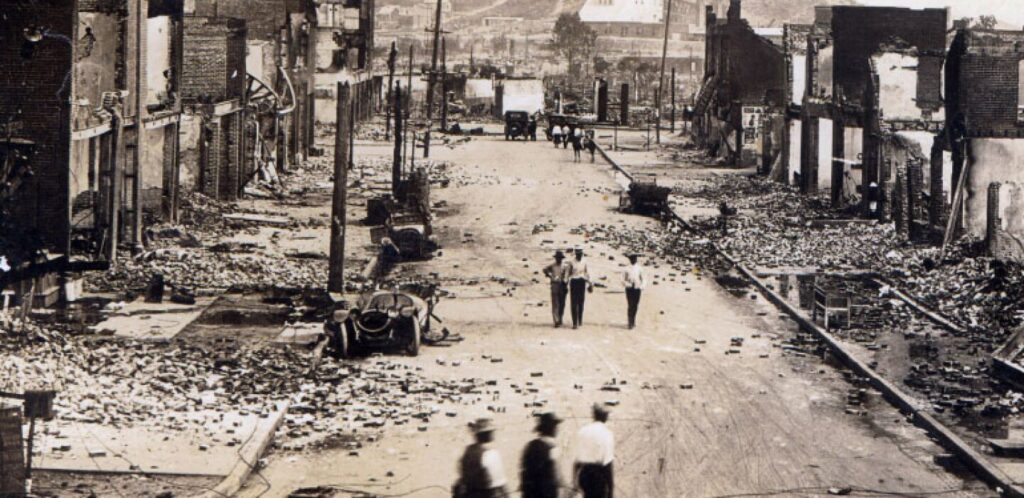
The cost was measured in lives, in homes, in memory. Between one hundred and three hundred Black Tulsans were killed, though the official count for decades was far lower. More than eight hundred people were wounded and ten thousand were left homeless overnight. Six thousand Black residents were rounded up and detained in camps for days without charge or due process. Hospitals turned away the wounded. Firefighters were prevented from putting out the flames. The right to life, the right to property, and the right to equal protection under law were all denied in real time.
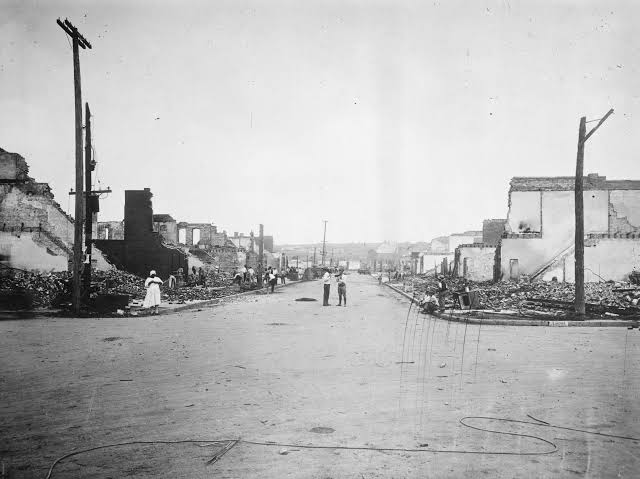
What followed was a second violence: silence. For generations the massacre was left out of textbooks, newspapers, and public memory. Survivors were told not to speak. Insurance claims were denied on the grounds that it was a “riot,” not a crime. No one was prosecuted for murder or destruction. The attack on Greenwood was not only an attack on buildings, but an attack on truth. To erase a community’s history is to erase its right to justice.
Today, excavations in Oaklawn Cemetery have begun to recover remains believed to be victims of the massacre. The last survivors lived into the 2020s, carrying eyewitness accounts the world tried to bury. Their descendants and human rights advocates continue to demand reparations, not as charity, but as recognition of a debt owed for stolen lives, stolen wealth, and stolen dignity.
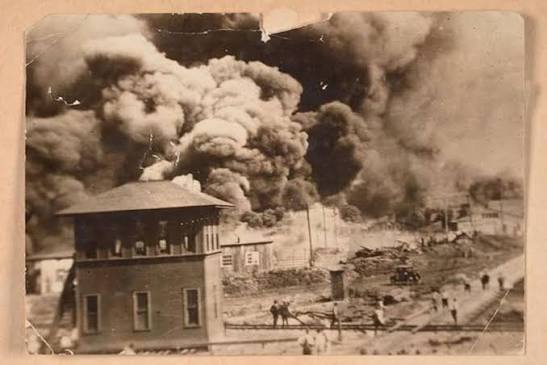
The Tulsa Race Massacre is not just American history. It is a human rights lesson for the world. It shows what happens when a state allows mobs to act with impunity. It shows what Black communities can build under pressure. And it shows that memory itself is an act of resistance. Greenwood was burned, but its story survived.
For Freedom Giants today, the mandate is clear. We do not look away from atrocity. We do not accept silence as the final word. We build anyway, we remember anyway, and we demand justice anyway. The right to exist, to own, to thrive, and to be protected by law is not negotiable. Greenwood proves it, and our generation must defend it.
Forward ever, backward never.
AFRICAN VOICES INTERNATIONAL
FREEDOM IN AFRICA